
Japanese Traditional Tattoos and the Art Behind Them
Share
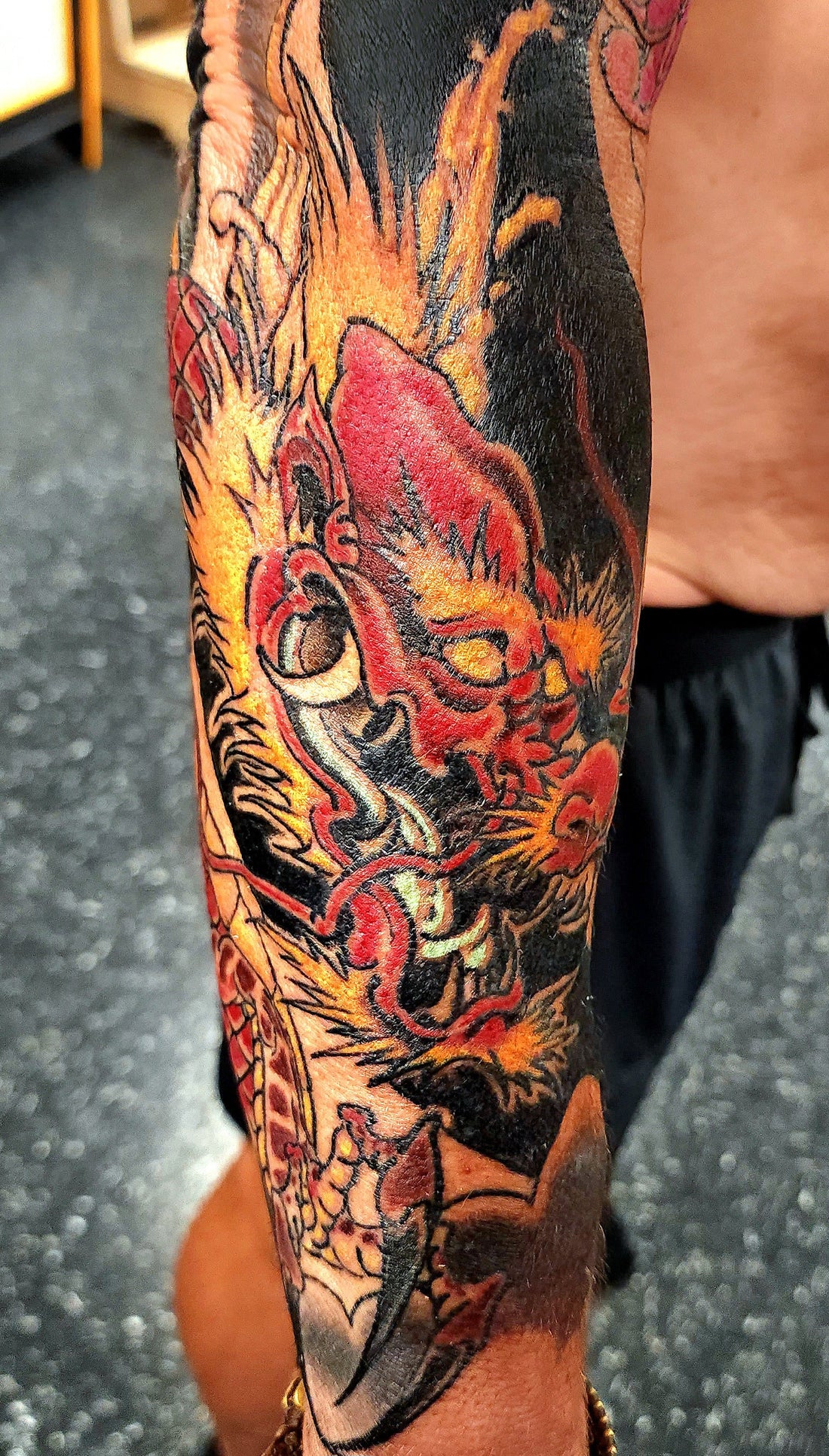
A dragon wrapping around an arm. A koi moving through waves. A tiger stretched across a back, with enough movement in the drawing that you can almost see it turn its head. Japanese traditional tattoos give an artist a lot to work with, and the subject is only part of what makes the finished piece work.
Look a little closer and you start noticing how everything fits together. The background carries your eye through the tattoo. Flowers break up areas of dark shading. The drawing follows the shoulder, elbow, or back instead of looking like an image dropped onto whatever space was available.
That takes planning. Whether you are thinking about a sleeve or one piece, understanding a little of the history and design behind Japanese tattooing is a good place to start.
What Makes a Tattoo Japanese Traditional
Japanese traditional tattooing is recognizable for its strong outlines, substantial black shading, and imagery drawn from folklore, religion, nature, and historical stories. Dragons, koi, tigers, snakes, and flowers are familiar subjects, often brought together with water, clouds, or wind bars.
The composition matters as much as the individual images. In a larger piece, a dragon might move from the upper arm toward the chest while the background connects those areas. The placement gives the drawing its direction, and the open skin helps keep everything readable.
You can spot a Japanese subject without the tattoo following a traditional composition. That distinction is useful when talking with your artist. Bring examples of the overall work you like, including the backgrounds, so you are both starting with the same idea.
How Woodblock Prints Helped Shape the Style
The large, pictorial tattoos associated with this tradition developed in close conversation with Japanese woodblock prints during the nineteenth century. In Edo, now Tokyo, printed images of tattooed heroes helped put elaborate body art in front of a wider audience.
One influential artist was Utagawa Kuniyoshi. His series One Hundred and Eight Heroes of the Popular Water Margin, published around 1827 to 1830, pictured characters from a Chinese novel known in Japan as Suikoden. Many wore elaborate tattoos featuring animals, flowers, and supernatural imagery.
These were dramatic drawings, with bodies twisting, clothing moving, and tattoo designs following the action. You can see why tattooers found so much to work with. Museums describe a relationship that moved in both directions: prints influenced tattooing, while an existing interest in tattoos also helped drive the artwork.
The style has continued to develop through generations of tattooers. Those older prints remain a place to look when you want to understand where some of the imagery comes from.
There Is More to the Imagery Than a Meaning Chart
If you have searched for Japanese tattoo ideas, you have probably found lists explaining what every animal, flower, and color means. They can give you a starting point, but a few words underneath a picture rarely tell the whole story.
Koi are commonly associated with perseverance, while dragons can carry associations with wisdom and strength. The particular story, pose, and surrounding imagery still matter. A named figure from a religious tradition or folktale deserves more attention than picking it because the drawing looks cool.
You do not need to show up knowing every reference. Bring your questions along with your images. If there is a particular story or association you want the tattoo to carry, say so early. That gives your artist something useful to work from before the drawing gets underway.
Why the Background Deserves Some Attention
When you save reference photos, it is easy to focus on the dragon's face or the tiger's expression. Take another look at what is happening around them.
Waves, clouds, and wind bars can connect the main subjects and give the tattoo movement. The balance of dark shading and open skin also changes how clearly you see the design. A background that works on a backpiece may need a different approach when it wraps around an arm.
That is why adding more subjects is not always the answer. If you want a koi, dragon, tiger, mask, and three different flowers in one forearm tattoo, we would want to talk through what matters most. Giving a good drawing enough room usually gets you further than trying to squeeze every reference into the same space.
Does Japanese Traditional Mean Tattooing by Hand
You may come across the word tebori while looking into Japanese tattoos. Tebori is a traditional method of tattooing by hand that predates the electric tattoo machine. It describes how the tattoo is applied, while the design has its own considerations.
Japanese tattooing today includes artists working with hand techniques and modern equipment. If the method matters to you, ask the artist directly about their process. You should know what you are booking before you sit down for the tattoo.
Planning a Japanese Tattoo That Fits
Start with the part of the body you want tattooed and the subject you keep coming back to. You do not have to arrive with a finished sleeve mapped out. A few good references and a clear idea of what you like are enough to begin the discussion.
Mention any plans to expand the work later. If you eventually want a full sleeve, that is useful to know before the first piece goes on. Existing tattoos, the space around them, and where you want the work to stop all affect what can be drawn.
Larger projects can require multiple appointments, so talk about budget, scheduling, and the scope of the work during the consultation. Your artist can explain what is realistic for your particular design. A photo of someone else's finished backpiece will not tell you how many sessions yours will take.
Japanese Tattoos at American Vintage Tattoo
At American Vintage Tattoo in Orange, California, we work with Japanese tattoo imagery and compositions, from individual pieces to larger projects. Bring us the references you have been saving, tell us where you want the tattoo, and let us know what you like about the work.
Take a look through our Japanese tattoo gallery, then book an appointment to talk through your idea. We can help work out the size, placement, and drawing so the finished tattoo fits you.