
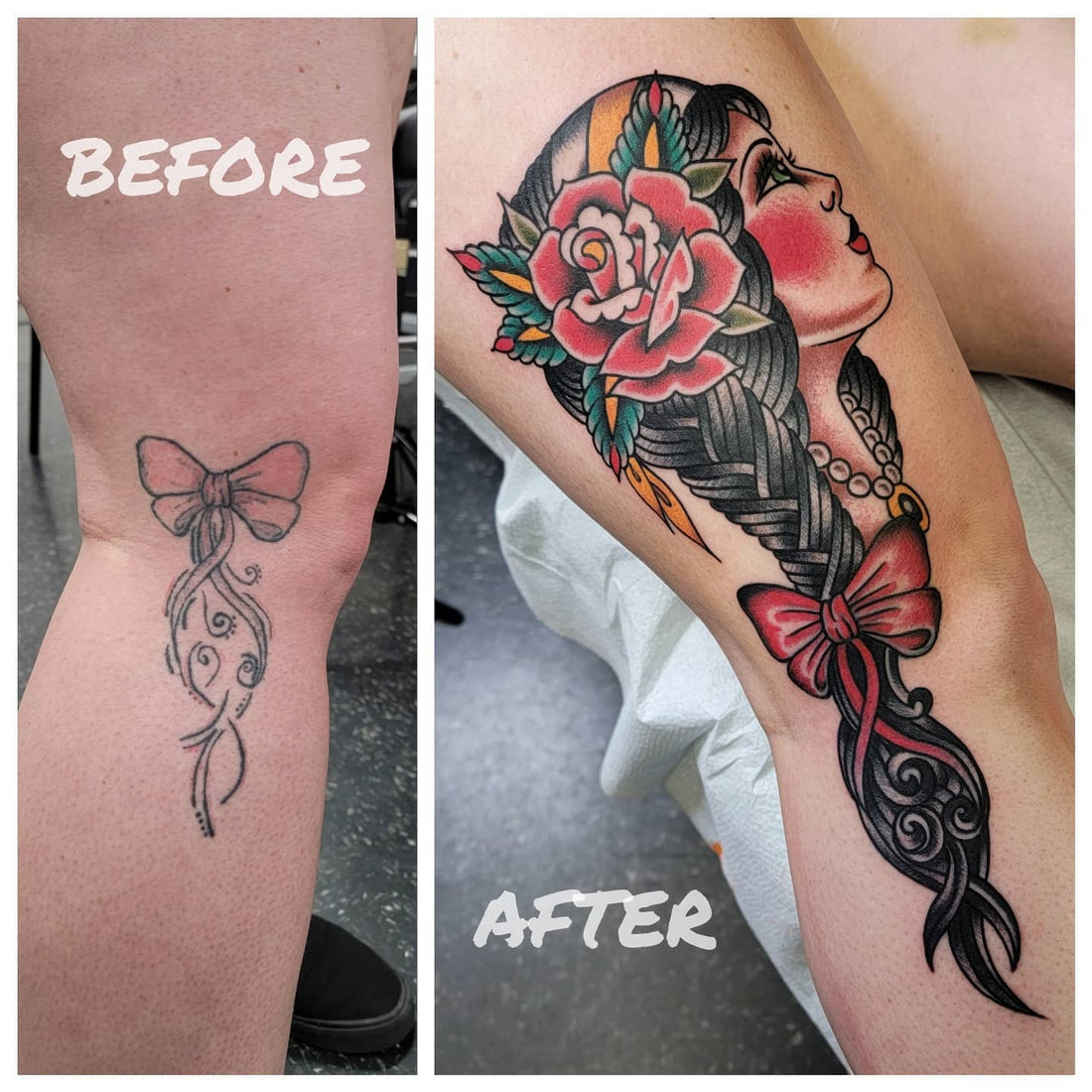
Tattoo Cover-Up or Laser Removal: Which Is Right for You?
Share
Should I Cover My Tattoo Or Have It Removed?
It depends. A tattoo cover-up may suit you if you still want a tattoo in that area and are open to a new design that works around the existing ink. Laser removal may be a better direction if your goal is to reduce or remove the tattoo rather than replace it. Some projects involve laser lightening before a cover-up.
The right choice starts with what you want at the end. A new tattoo, less visible ink, and an attempt at complete removal are different goals, and they need different conversations.
In this little blog, we will explain how to compare tattoo cover-up vs. laser removal, what affects each option, and why planning before booking can save you from committing to the wrong approach.
Do I Want a Different Tattoo or No Tattoo?
Start here before comparing prices. If you would be excited to wear a different design, a cover-up consultation can help you understand the possibilities. If you would prefer the area without a tattoo, adding a larger design may move you further from that goal.
You do not need to decide immediately. Bring the original tattoo and your ideas to a cover-up artist, then discuss removal separately with a qualified provider if that option interests you. It is much easier to explore both directions before adding another layer of ink.
What Can A Cover-Up Actually Change?
A cover-up changes what the tattoo looks like by designing around the existing pigment. It can turn an unwanted piece into something with a different subject, composition, and meaning.
The trade-off is that your options depend on the old tattoo. A dark area may need darker elements in the new design, and the replacement may need to extend beyond the original boundaries.
If your ideal replacement is smaller, lighter, or much more delicate, ask whether it is realistic as a direct cover-up. A consultation should make those limitations clear before you commit.
What Should I Know About Laser Removal?
Laser treatment breaks up tattoo pigment so the body can gradually clear it. Removal usually involves multiple treatments rather than a single visit, and complete removal is not guaranteed. Tattoo colors, the amount of ink, and individual skin factors influence the treatment plan.
The FDA advises that tattoo-removal lasers be used by or under the supervision of a health care professional. Ask the provider about experience treating your skin type, realistic results, risks, and aftercare. Scarring and changes in skin color are possible, so this needs a proper assessment rather than a promise based on a photograph.
Can I Lighten A Tattoo Instead Of Removing It?
Sometimes the goal is to reduce the existing ink enough to allow more design options. That is different from trying to remove all visible pigment.
Talk to your cover-up artist before starting treatment so the removal provider understands what the new design needs. The artist may identify a particular area that limits the composition, while the provider assesses what treatment can reasonably achieve.
Do not assume you need a set number of sessions. The old tattoo’s response and the planned cover-up determine whether lightening has reached a useful point.
Can I Get The Cover-Up Right After Laser Treatment?
Do not book a new tattoo simply because the treated area looks lighter. Discuss readiness with the removal provider and your tattoo artist, and have the skin assessed before proceeding.
Treatment and recovery need to be part of the project schedule. Ask how the provider will evaluate the area and when your artist should review it again. A fixed online waiting period cannot account for your particular treatment or skin.
Is There One That Costs Less?
There is no reliable universal answer. A cover-up quote depends on the new design, its size, the work needed to disguise the old tattoo, and the artist’s rate. Removal costs depend on the treatment plan and the number of sessions required.
If you are considering lightening followed by a cover-up, budget for both parts. Ask what each estimate includes and what could change it. A low price for one removal session is not the same thing as an estimate for the whole project.
What Should I Ask at My Consultation?
Ask the cover-up artist what designs are realistic, whether the tattoo needs to be larger, and whether lightening would meaningfully change the options. Bring examples of the finished style you want rather than only photographs of what you dislike.
Ask the removal provider about likely results, treatment costs, risks, and how they will reassess progress. Tell them if your goal is a new tattoo so the two parts of the plan can be considered together.
Keep your priorities clear. You might care most about staying within a certain area, preserving room for a future sleeve, or avoiding a darker replacement. Those preferences should shape the decision.
So, how do I start the process?
If you are considering a cover-up, we can start by discussing the existing tattoo and what you want instead. American Vintage Tattoo has artists experienced in cover-up work, and that first conversation can help you understand your design options. Ready to find a direction for your old tattoo? Contact American Vintage Tattoo to arrange a cover-up consultation and talk through your next piece before you book!